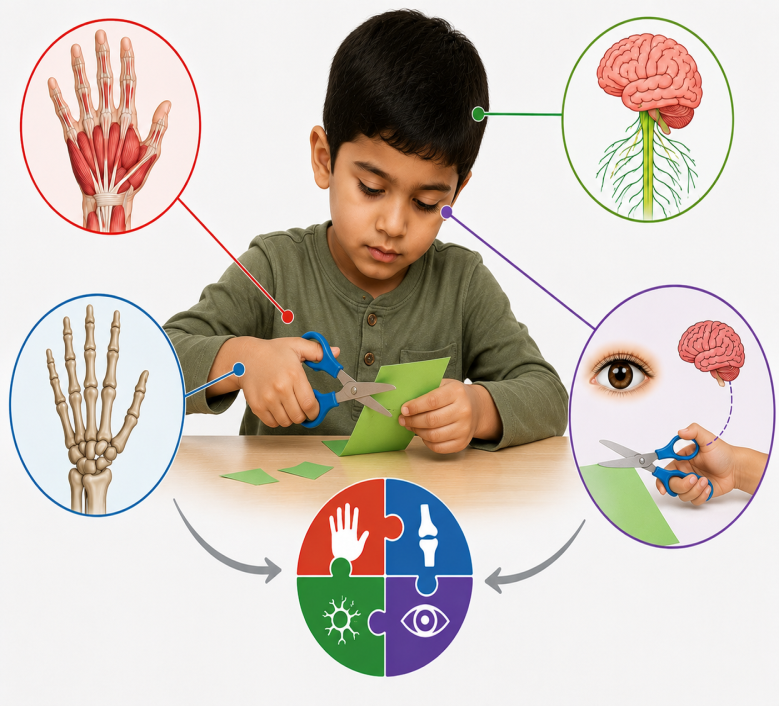
Fine motor skills refer to small, precise, and coordinated movements of the hands, fingers, wrists, feet, and toes. These skills develop gradually from birth to adulthood and are essential for daily activities. Fine motor control depends on the coordination of muscles, joints, nerves and hand-eye movements. Although mainly related to hand and finger movements like grasping or writing, fine motor skills can also involve the feet and toes in activities such as dancing, soccer, or tasks performed using the feet instead of the hands.
Fine motor control is a complex process that depends on several important factors, including:
• Awareness and Planning – The ability to understand, plan, and execute movements properly.
• Coordination – Smooth and synchronized movement between muscles and body parts.
• Muscle Strength – Adequate strength in the small muscles of the hands, fingers, feet, and toes.
• Normal Sensation – Proper sensory feedback in the hands and fingers (or feet and toes) to guide movement accurately.
• Precision (Dexterity) – The ability to perform small, accurate, and controlled movements efficiently.
Why are fine motor skills important?
Fine motor skills are essential for everyday activities such as eating, dressing, brushing teeth, cooking, writing, and using mobile phones. They help individuals become independent in self-care and support hobbies like drawing, crafting, gaming, and playing musical instruments. In adults, fine motor skills are also important for using tools, computers, and performing delicate tasks such as surgery.
Child development means the way a child grows and learns over time. Experts usually look at four main areas of development:
- Physical development (including fine motor skill)
- Thinking and learning skills
- Language and communication skills
- Social and emotional skills
Healthcare professionals and teachers carefully observe fine motor development because delays may indicate the need for additional developmental support. Early identification and intervention can improve a child’s confidence, independence, and learning abilities.
Common Examples of Fine Motor Skills:
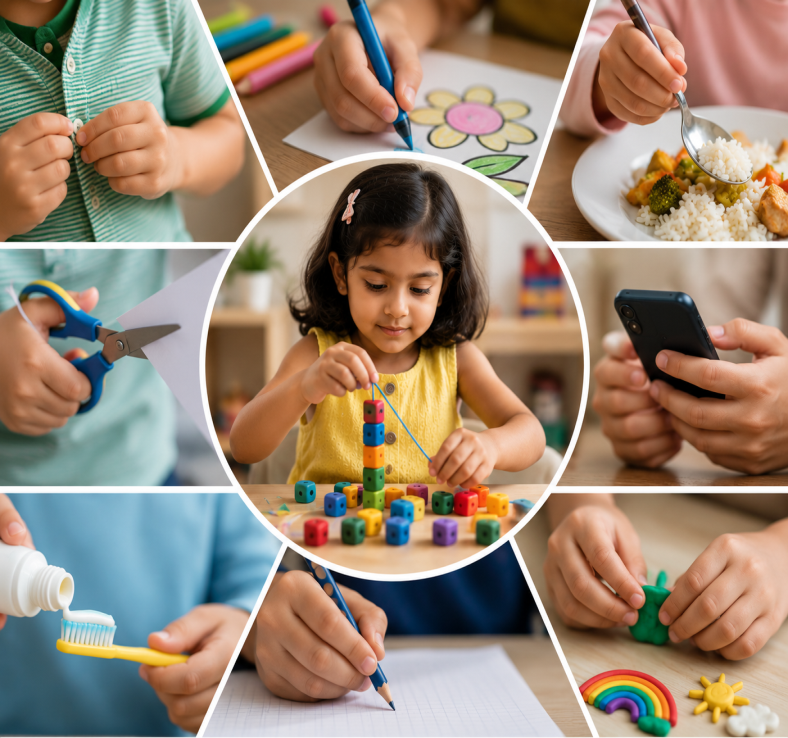
- Holding and using a pencil or crayon for writing, drawing and coloring.
- Using scissors to cut paper along lines.
- Folding paper or clothes
- Turning pages of a book
- Buttoning shirts ,Zipping a zipper
- Tying shoelaces
- Opening and closing containers
- Picking up small objects & Carrying objects.
- Threading beads
- Building with blocks or LEGO
- Typing on a keyboard, using a computer mouse and operating a touch screen device.
- Eating with a spoon, fork or chop stick
- Drinking from a cup
- Self-grooming activities (brushing teeth, combing hair, washing hands, applying makeup, and nail care, braiding hair).
- Twisting a doorknob
- Screwing and unscrewing bottle caps
- Solving puzzles
- Playing musical instruments like piano, guitar or flute
- Peeling vegetables and fruits.
- Gardening tasks like planting seeds
- Using tools like screwdrivers or small hammers
- Counting money or coins
When should you seek professional help for fine motor skill difficulties?
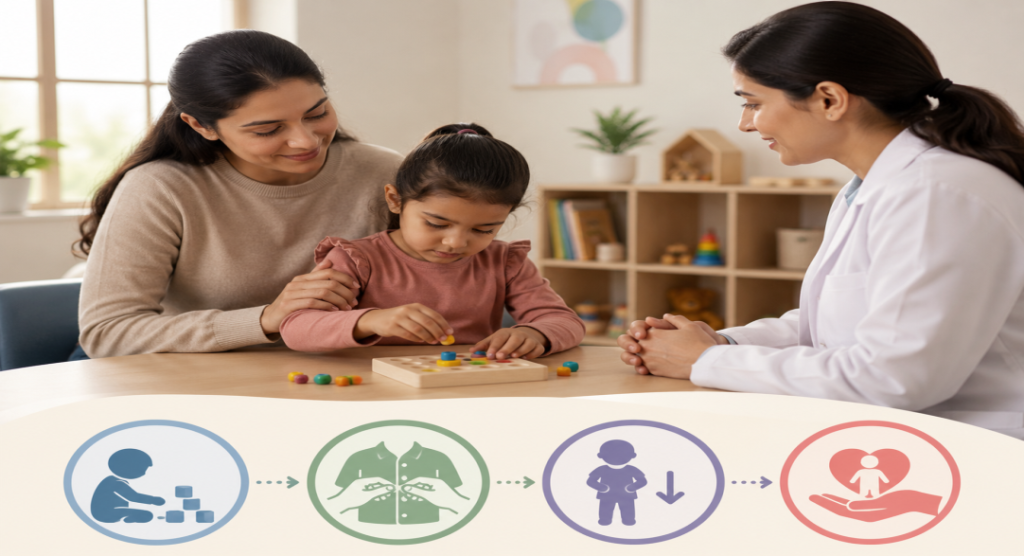
If a child is not achieving age-appropriate fine motor milestones, struggles with everyday tasks or shows a loss of previously acquired skills, it is important to seek professional support. Early identification and intervention can significantly improve developmental outcomes.
Final Takeaway
Fine motor skill play a vital role in a child’s ability to perform everyday tasks independently, participate in learning activities, and build confidence in daily life. From holding a pencil and buttoning clothes to using technology and engaging in creative activities, these skills form an important foundation for overall development. When difficulties are identified early, timely support can help children strengthen their abilities and achieve greater independence.
At aaziban Care Center, our team understands that every child develops at their own pace. Through individualized assessment, therapeutic guidance, and family-centered support, we help children improve fine motor coordination, hand strength, dexterity, and functional daily living skills. If you notice that your child is struggling with age-appropriate fine motor activities, seeking professional guidance early can make a meaningful difference in their development, learning, and future success.
1. What are fine motor skills?
Fine motor skills are small, controlled movements involving the hands, fingers, wrists, feet, and toes. These skills help with tasks that require precision and coordination, such as writing, buttoning clothes, and using utensils.
2. Why are fine motor skills important for children?
Fine motor skills support a child’s independence, learning, and daily activities. They are essential for tasks such as writing, drawing, eating, dressing, and using school tools, helping children participate confidently in everyday life.
3. What are some common examples of fine motor skills?
Common examples include holding a pencil, using scissors, turning pages, tying shoelaces, buttoning shirts, building with blocks, typing on a keyboard, brushing teeth, and picking up small objects.
4. When should parents seek professional help for fine motor skill difficulties?
Parents should consider seeking professional support if a child struggles with age-appropriate fine motor tasks, has difficulty performing everyday activities, or loses skills they previously mastered. Early intervention can help improve development and independence.
Need Personalized Guidance for Special Education?
Our senior certified therapists at Aaziban Care Center provide customized 1-on-1 evaluation and treatment plans at our care centers.