Introduction
Neurapraxia is the mildest form of peripheral nerve injury and is commonly seen in trauma, compression, or sports-related incidents. It results in temporary loss of nerve function without structural damage, making it highly reversible with proper care.
Definition
Neurapraxia is defined as a transient conduction block of a nerve without axonal disruption. The nerve remains anatomically intact, and recovery usually occurs completely within days to weeks.
Etiology
- Direct trauma or blunt injury
- Stretch injuries during sudden movements
- Compression (e.g., prolonged pressure on a nerve)
- Iatrogenic causes (e.g., improper positioning during surgery)
- Ischemia (temporary loss of blood supply)
Epidemiology
- Common in athletes, especially in contact sports
- Often seen in upper limb nerves (e.g., radial, ulnar nerve injuries)
- Frequently affects young adults
- Higher incidence in occupational or repetitive strain activities
Clinical Features
- Sudden onset following injury
- Sensory disturbances such as numbness or tingling
- Temporary loss of motor function
- No muscle atrophy in the early stages
- Preservation of nerve continuity
Signs and Symptoms
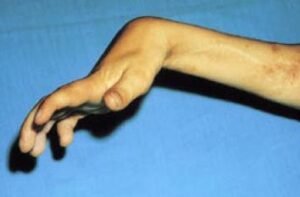
- Weakness or paralysis of affected muscles
- Decreased or absent reflexes
- Paresthesia (tingling or “pins and needles”)
- Mild pain or discomfort
- Functional limitations in daily activities
Complication
- Prolonged weakness if recovery is delayed
- Joint stiffness due to immobilization
- Muscle disuse reduces endurance
- Rare progression to more severe nerve injury if not managed properly
Physiotherapy Management
- Rest and Protection: Avoid further nerve irritation
- Patient Education: Importance of adherence to therapy and activity modification
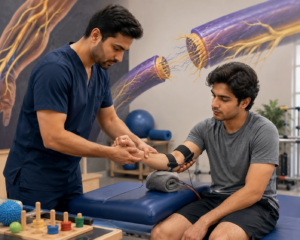
- Range of Motion (ROM) Exercises: Prevent stiffness and maintain joint mobility
- Pain Management: Modalities like ice, TENS, or gentle massage
- Strengthening Exercises: Gradual muscle strengthening as nerve function returns
- Neuromuscular Re-education: Improve coordination and motor control
- Ergonomic Advice: Prevent recurrence and reduce strain
- Functional Training: Restore daily activities and occupational tasks
Conclusion
Neurapraxia is a reversible nerve injury with an excellent prognosis when managed appropriately. Early physiotherapy intervention plays a vital role in restoring function, preventing complications, and ensuring a smooth and complete recovery. A structured rehabilitation program significantly enhances outcomes and return to normal activities.
What is Neurapraxia?
It is a temporary nerve conduction block without structural damage, with full recovery expected in days to weeks.
What are common symptoms of Neurapraxia?
Numbness, tingling, muscle weakness or paralysis, reduced reflexes, and mild pain.
What is the role of physiotherapy in Neurapraxia?
It aids recovery through ROM exercises, strengthening, pain management, neuromuscular re-education, and functional training.
Need Personalized Guidance for Physiotherapy?
Our senior certified therapists at Aaziban Care Center provide customized 1-on-1 evaluation and treatment plans at our care centers.