Introduction
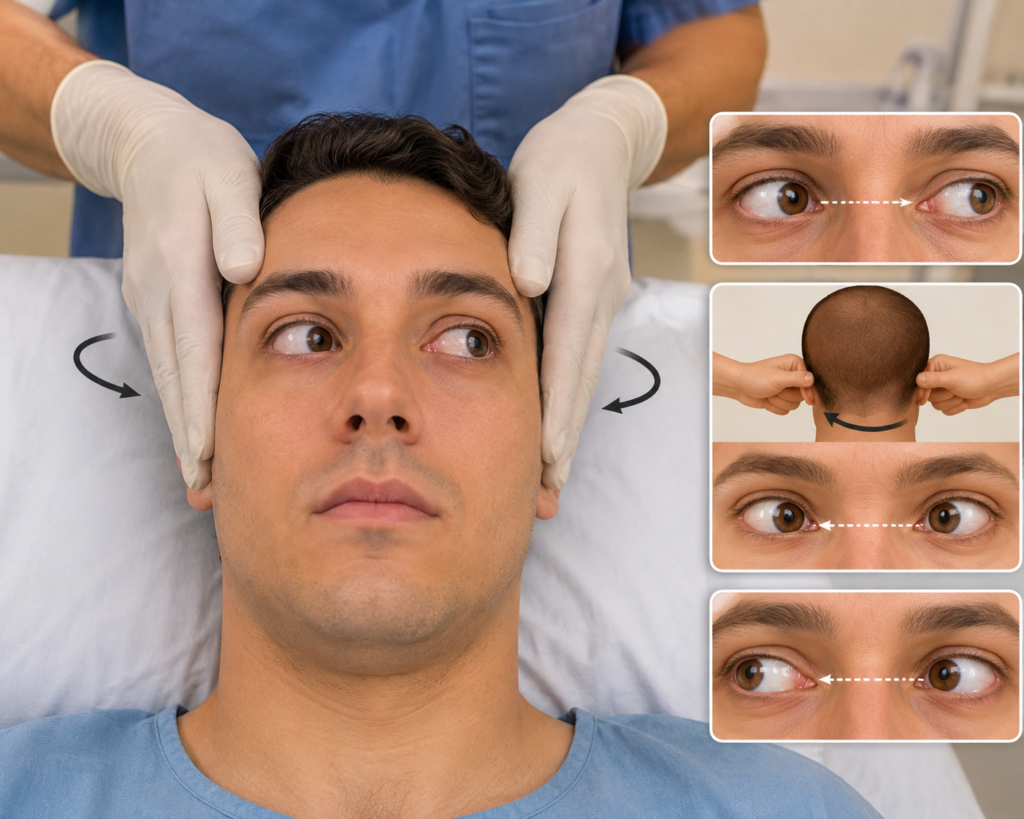
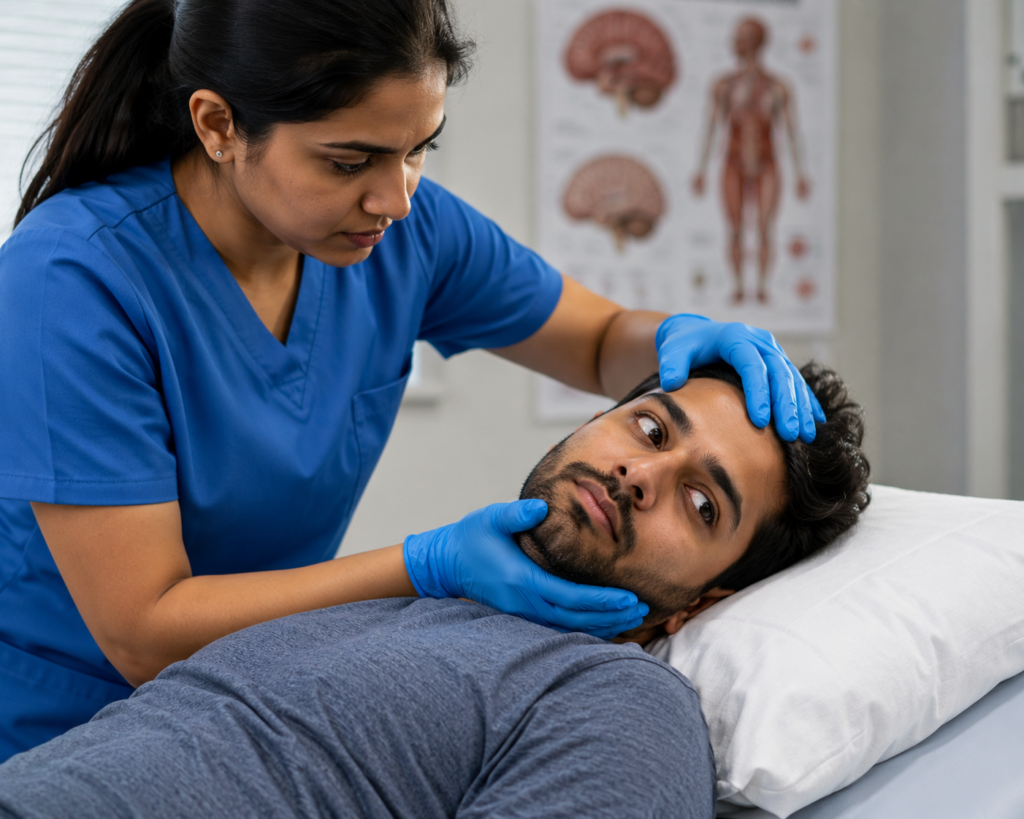
The Doll’s eye reflex is an important neurological brainstem reflex that helps healthcare professionals assess brainstem function, particularly in unconscious or critically ill patients. Although it is not a disease, evaluating this reflex provides valuable information about the integrity of the brainstem and the vestibulo-ocular pathway. The test should only be performed after cervical spine injury has been ruled out.
Definition
The Doll’s eye reflex, also known as the oculocephalic reflex, is a brainstem reflex in which the eyes move in the direction opposite to head rotation, helping maintain a stable visual gaze. A normal response indicates an intact brainstem, while an absent or abnormal response may suggest brainstem dysfunction.
Etiology
Abnormal or absent Doll’s eye reflex may occur due to:
- Severe traumatic brain injury
- Brainstem tumors
- Brainstem stroke
- Increased intracranial pressure
- Hypoxic-ischemic brain injury
- Brain death
- Central nervous system infections
- Severe encephalopathy
- Multiple sclerosis affecting the brainstem
- Drug or sedative intoxication in severe cases
Clinical Features
Patients with impaired Doll’s eye reflex may present with:
- Altered level of consciousness
- Impaired eye movement coordination
- Coma or unresponsiveness
- Poor visual fixation
- Abnormal brainstem reflexes
- Neurological deficits
- Decreased responsiveness to external stimuli
- Associated motor weakness depending on the underlying condition
Signs and Symptoms
Although the reflex itself is a clinical examination finding, associated symptoms include:
- Loss of normal eye movement during head rotation
- Fixed or dysconjugate gaze
- Abnormal pupillary responses
- Altered consciousness
- Weakness or paralysis
- Balance impairment
- Dizziness in selected neurological disorders
- Difficulty with visual tracking
- Speech disturbances in some patients
- Poor coordination
Physiotherapy Management
Physiotherapy focuses on the underlying neurological condition rather than the reflex itself.
- Comprehensive neurological assessment
- Early positioning to prevent pressure injuries
- Bed mobility and transfer training
- Passive range-of-motion exercisese
- Vestibular rehabilitation when appropriate
- Balance and postural control exercises
- Gaze stabilization exercises for suitable patients
- Strengthening exercises
- Gait training during recovery
- Respiratory physiotherapy for critically ill patients
- Functional mobility training
- Fall prevention strategies
- Patient and caregiver education
Complications
If the underlying neurological condition is severe, complications may include:
- Persistent neurological deficits
- Impaired mobility
- Contractures
- Respiratory complications
- Increased risk of falls
- Long-term disability
- Visual coordination problems
- Reduced independence
- Poor quality of life
Risk Factors
Factors associated with conditions affecting the Doll’s eye reflex include:
- Severe head trauma
- Stroke
- Brain tumors
- Cardiac arrest with prolonged oxygen deprivation
- Advanced neurological diseases
- Uncontrolled hypertension
- Central nervous system infections
- Diabetes mellitus
- Older age
- Substance toxicity
Conclusion
The Doll’s eye reflex is an essential bedside neurological assessment used to evaluate brainstem integrity in unconscious patients. An absent or abnormal reflex often indicates serious neurological dysfunction and requires urgent medical evaluation. Physiotherapy plays a vital role in rehabilitation by improving mobility, preventing complications, restoring functional independence, and enhancing quality of life once the patient’s condition is medically stable.
Q: What is the Doll’s eye reflex?
A: The Doll’s eye reflex (oculocephalic reflex) is a brainstem reflex where the eyes move opposite to head rotation, indicating normal brainstem function.
Q: What does an absent Doll’s eye reflex indicate?
A: An absent or abnormal Doll’s eye reflex may indicate serious brainstem dysfunction caused by conditions such as brain injury, stroke, or brain death.
Q: What is the role of physiotherapy in patients with an impaired Doll’s eye reflex?
A: Physiotherapy helps improve mobility, balance, strength, and functional independence while preventing complications after the patient’s neurological condition is medically stable.
Need Personalized Guidance for Physiotherapy?
Our senior certified therapists at Aaziban Care Center provide customized 1-on-1 evaluation and treatment plans at our care centers.