
ertain. You may wonder what it means for your child’s future or whether they will be able to learn, make friends, or become independent.The good news is that an intellectual disability does not define who your child is. Every child has unique strengths, interests, and abilities. While they may learn at a different pace and need extra support, they can continue to develop important communication, social, and life skills with patience, encouragement, and early guidance.Think of learning like climbing a staircase. Some children climb quickly, while others take one careful step at a time. Both are still moving forward. As a parent or caregiver, your support makes every step possible.This guide explains intellectual disabilities in simple, easy-to-understand language and shares practical ways you can help your child communicate, learn, and become more confident every day.
Understanding Intellectual Disabilities and Communication
Children with intellectual disabilities learn, think, and solve problems more slowly than other children of the same age. This difference begins during childhood and may affect learning, communication, and everyday activities.Communication is much more than talking. It includes understanding others, expressing needs, asking questions, sharing feelings, and connecting with family and friends.
For example, your child may:
- Learn new words more slowly.
- Need instructions repeated several times.
- Find it difficult to explain what they are thinking.
- Take longer to answer questions.
- Prefer using gestures, pictures, or pointing instead of speaking.
Imagine asking your child, “What would you like for lunch?” Instead of answering immediately, they may point to an apple or show you a picture. That is communication too—and it should be encouraged and celebrated.
Remember, every child communicates differently. The goal is not to compare your child with others but to help them communicate in the best way they can.
Supporting Language Development in Everyday Life

One of the best ways to help your child develop language is through everyday moments.
You don’t need expensive toys or long therapy sessions to make a difference. Simple conversations during daily routines can become powerful learning opportunities.
For example:
While getting dressed, you can say,
“Let’s wear your blue shirt today.”
During mealtime,
“Would you like rice or chapati?”
While walking outside,
“Look! That’s a big dog. Can you hear it barking?”
These everyday conversations help your child connect words with real experiences.
Here are a few simple ways you can support language development:
- Talk slowly and clearly.
- Use short, simple sentences.
- Read picture books together every day.
- Name objects around the house.
- Give your child enough time to answer.
- Repeat important words often.
- Celebrate every communication attempt, even if it isn’t perfect.
Children learn best when communication feels fun, safe, and part of everyday life.
Communication Strengths and Challenges
Every child with an intellectual disability has their own unique abilities.
You may notice that your child struggles in some areas while surprising you with strengths in others.
Your child’s strengths may include:
- Enjoying conversations with familiar people.
- Learning through repetition.
- Following routines well.
- Using gestures and facial expressions effectively.
- Showing kindness and affection.
Some challenges may include:
- Delayed speech.
- Limited vocabulary.
- Difficulty understanding long sentences.
- Trouble remembering instructions.
- Difficulty expressing emotions.
- Finding social situations confusing.
Instead of focusing only on what your child cannot do, notice what they can do.
Every new word, every successful conversation, and every small improvement is progress worth celebrating.
Importance of Early Intervention
Parents often wonder,
“Should I wait and see if my child catches up?”
While every child develops differently, seeking professional advice early can make a significant difference.
Early intervention helps children build important communication, learning, and daily living skills during the years when the brain is developing most rapidly.
Support may include:
- Speech and language therapy
- Occupational therapy
- Special education
- Behavioural support
- Parent training and guidance
Think of early intervention like planting a young tree. The earlier you provide water, sunlight, and care, the stronger the tree can grow.
Remember, asking for help early is not giving up—it is giving your child the best opportunity to succeed.
Building Functional Communication Skills
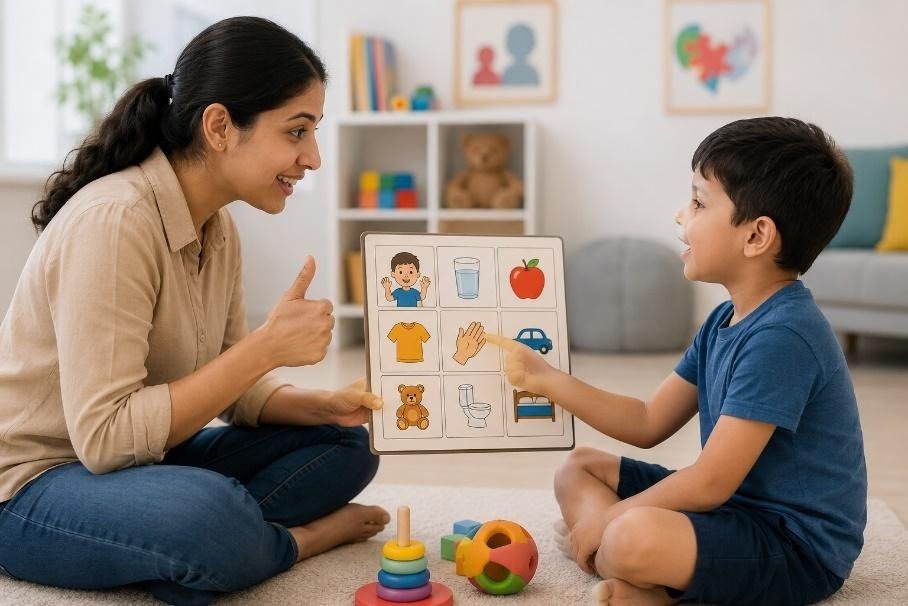
Communication is most valuable when it helps children manage everyday life.
This is called functional communication.
Rather than focusing only on perfect speech, the goal is helping your child express everyday needs such as:
- “I’m hungry.”
- “I need help.”
- “I’m tired.”
- “I want to play.”
- “I’m feeling sad.”
- “I need the toilet.”
Some children use:
- Spoken words
- Gestures
- Sign language
- Picture cards
- Communication devices
Every successful attempt to communicate reduces frustration and builds confidence.
The method matters less than the message.
Teaching Social Communication Skills
Making friends and interacting with others are important parts of growing up.
Children with intellectual disabilities sometimes need extra support learning these social skills.
You can practice together at home by encouraging your child to:
- Say hello and goodbye.
- Take turns during conversations.
- Listen while others are speaking.
- Share toys with siblings.
- Ask simple questions.
- Recognize happy, sad, or angry facial expressions.
- Respect personal space.
Role-playing everyday situations can make learning fun.
For example, pretend to visit a shop or invite teddy bears to a tea party where everyone takes turns talking.
Small daily practice helps children become more comfortable in real social situations.
Encouraging Independence Through Communication
Communication gives children confidence to do things on their own.
As parents, it can be tempting to speak for your child or complete tasks quickly.
Instead, try giving them opportunities to communicate independently.
You might encourage your child to:
- Choose between two snacks.
- Ask for help when needed.
- Tell someone how they feel.
- Order food at a restaurant.
- Answer simple questions themselves.
- Participate in family discussions.
Every independent decision helps build confidence.
Progress may seem slow, but each small step teaches an important life skill.
School Support for Children with Intellectual Disabilities
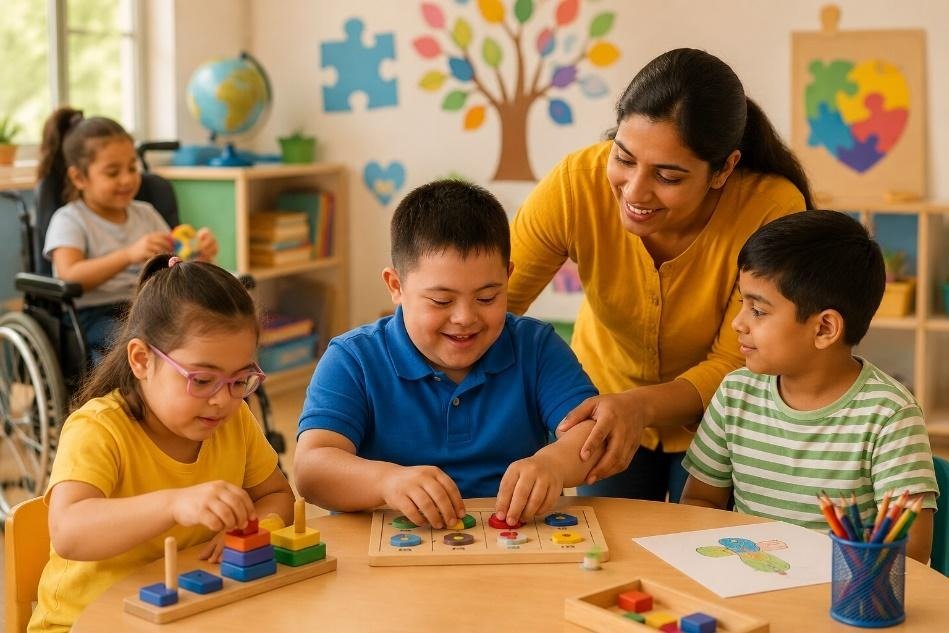
School is not just a place for learning subjects—it is also where children develop communication, friendships, and independence.
Many schools provide additional support through:
- Individual learning plans.
- Speech and language services.
- Classroom accommodations.
- Visual learning materials.
- Small-group teaching.
- Extra time for activities.
Parents, teachers, and therapists achieve the best results when they work together.
Sharing your child’s strengths, interests, and challenges helps everyone provide consistent support.
Remember, you are an important member of your child’s educational team.
Myths and Facts About Intellectual Disabilities

Many misunderstandings still exist about intellectual disabilities.
Let’s separate fact from fiction.
Myth: Children with intellectual disabilities cannot learn.
Fact: They can learn many new skills with patience, repetition, and appropriate teaching.
Myth: Speaking is the only form of communication.
Fact: Children communicate through gestures, pictures, signs, facial expressions, and communication devices too.
Myth: Early therapy isn’t necessary.
Fact: Early support often helps children develop communication and daily living skills more effectively.
Myth: They will always depend on others.
Fact: Many individuals become increasingly independent with the right guidance and opportunities.
Myth: Every child with an intellectual disability is the same.
Fact: Every child has unique personalities, strengths, interests, and abilities.
Celebrating Individual Strengths
Every child deserves to be recognized for who they are—not just for the challenges they face.
Your child may have a wonderful memory for songs, enjoy drawing, love helping others, or show incredible determination when learning something new.
Celebrate these strengths.
You can support your child by:
- Praising effort instead of perfection.
- Encouraging hobbies and interests.
- Celebrating small milestones.
- Creating opportunities to succeed.
- Focusing on abilities rather than limitations.
- Building confidence through positive encouragement.
Remember, success does not always mean doing things the fastest. Sometimes success means trying again, learning one new skill, or communicating one new word.
Those moments matter.
Final Thought
Raising a child with an intellectual disability may bring unique challenges, but it also brings countless moments of growth, resilience, and joy. Progress may happen one step at a time, yet every new word spoken, every friendship formed, and every skill learned is a meaningful achievement.
Your encouragement, patience, and belief in your child can make a lasting difference. By creating a supportive environment, celebrating strengths, and seeking help when needed, you are helping your child build confidence and independence.
At Aaziban, we understand that every child deserves individualized care, compassionate guidance, and opportunities to reach their full potential. Our multidisciplinary team works closely with families to support communication, learning, social development, and everyday life skills through personalized intervention plans. We believe that when parents and professionals work together, children can gain the confidence and abilities they need to thrive at home, in school, and within their communities.
1. What are intellectual disabilities?
Intellectual disabilities are developmental conditions that affect a child’s ability to learn, reason, solve problems, and manage everyday tasks. With the right support, children can continue to develop important life and communication skills.
2. Can children with intellectual disabilities learn to communicate effectively?
Yes. Many children improve their communication through speech, gestures, sign language, picture cards, or communication devices. Early intervention and regular practice can make a significant difference.
3. Why is early intervention important for intellectual disabilities?
Early intervention helps children build communication, learning, social, and daily living skills during the early years when brain development is most active, improving long-term outcomes.
4. How can parents support a child with an intellectual disability at home?
Parents can support their child by using simple language, encouraging everyday conversations, reading together, following routines, celebrating small achievements, and working closely with therapists and teachers.
Need Personalized Guidance for Speech Therapy?
Our senior certified therapists at Aaziban Care Center provide customized 1-on-1 evaluation and treatment plans at our care centers.